Building a Webinar Program From Scratch (200 → 2,000 Registrants)
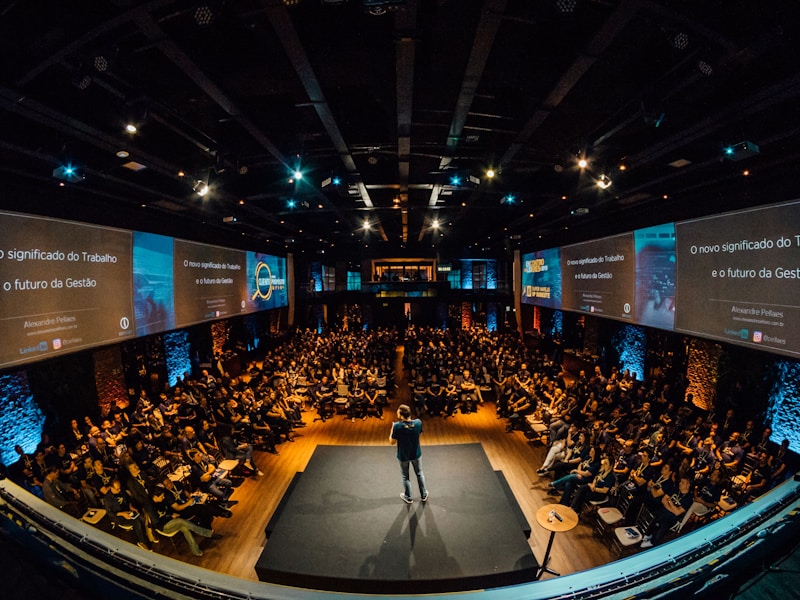
Our first webinar had 200 registrants and 40 attendees. Eighteen months later, we're averaging 2,000 registrants and 600 attendees. Here's how we built a webinar program that actually generates pipeline.
Our first webinar: 200 registrants, 48 attendees. By Q&A, 22 remained. Of those, maybe 5 were qualified prospects.
We generated 2 qualified leads after 40+ hours of work.
My CMO asked: "Is this worth doing?"
Eighteen months later:
- 2,000 registrants per webinar
- 600 attendees (30% show rate)
- 180 qualified leads (30% of attendees)
- $2.4M in influenced pipeline annually
Webinars became our second-highest performing demand gen channel.
Here's how we built a webinar program that actually works.
The Topic Selection Mistake That Killed Our First Webinars
Our first five webinars failed because we talked about what we wanted, not what our audience needed.
Topics like "Introducing [Product Feature X]" and "The Future of B2B Marketing" got 150-250 registrants, ~20% show rates, <5 qualified leads each.
The insight: People register to solve specific problems right now, not to hear your opinions.
I analyzed our best gated content: "How to Calculate Marketing ROI When Your CEO Doesn't Believe in Attribution" got 300 downloads/month because it addressed a specific, urgent problem.
I created: "How to Prove Marketing ROI to Your CFO (Even With Messy Attribution Data)"
Result: 890 registrants, 32% show rate, 78 qualified leads.
Topic was the difference.
What drives registration:
Urgent, specific problems your ICP is actively solving now.
Practical outcomes: "How to [achieve result]" beats "The State of [trend]."
Urgency: "Solve this now" beats "might be interesting someday."
Emotional pain: "Prove ROI to Your CFO" hits harder than "Attribution Best Practices."
Our webinar topic framework now:
Topics must be problem-focused (specific pain point), outcome-oriented (clear result), role-specific (targeted persona), and urgency-driven (solve this now).
Examples that work:
- "How to Cut Your CAC by 30% Without Reducing Marketing Spend"
- "The Sales Enablement Framework That Cut Our Ramp Time From 90 to 45 Days"
Topics that fail:
- "5 B2B Marketing Trends for 2024" (generic, no urgency)
- "Introducing Our New Product Dashboard" (sales pitch)
Topic selection is 70% of your webinar's success. Get it right, and promotion is easy. Get it wrong, and no amount of promotion will save you.
The Promotion Strategy That Took Us From 200 to 2,000 Registrants
Our first webinars got 200 registrants because we only promoted them through our existing channels: email list, social media, blog.
These channels worked okay for reaching people who already knew us. They didn't work for reaching new audiences.
The breakthrough: Webinars are top-of-funnel content. We were promoting them like bottom-of-funnel content.
Our email list was existing leads and customers. Our blog readers were mostly existing users. Our social media followers were people already in our ecosystem.
If we wanted to grow registrations, we needed to reach people who'd never heard of us.
What we changed:
Paid promotion became our primary channel. We now allocate $3,000-5,000 in paid ads per webinar:
- LinkedIn Sponsored Content targeting our ICP (job title, company size, industry)
- Google Search ads targeting problem-related keywords ("how to prove marketing ROI")
- Retargeting ads to website visitors and content downloaders
Result: Paid ads now drive 60% of our webinar registrations, and these are net-new contacts, not existing database.
Partner co-marketing amplified our reach. We partnered with complementary (non-competitive) vendors to co-host webinars:
- They promote to their audience
- We promote to ours
- Both brands benefit from the combined reach
Our co-marketed webinars average 2,500 registrants vs. 1,200 for solo webinars.
We treated webinar promotion like a launch campaign. Instead of 2-3 emails, we run a 3-week multi-channel campaign with emails, LinkedIn posts, and paid ads ramping up each week. Final reminders go out the day before and morning of the webinar.
This promotion drumbeat increased our registration rate by 400%.
We optimized the registration page for conversion. Now we include outcome-focused headlines, speaker credibility, social proof, agenda previews, and minimal form fields. This redesign improved conversion from ad click to registration by 35%.
The Content Format That Tripled Our Attendance Rate
Our early webinars had a 20-25% show rate. Industry average is 30-40%. We were below average.
When I surveyed registrants who didn't attend, the #1 reason was: "It felt like a sales pitch disguised as education."
They were right. Our webinars were 50% product demo, 30% thought leadership fluff, 20% tactical advice.
People don't show up to webinars to be sold to. They show up to learn something practical they can implement immediately.
We completely rebuilt our webinar content format:
The new structure (60 minutes total):
Minutes 0-5: Problem setup
- State the problem clearly
- Share a story of someone facing this problem
- Establish credibility: "We've helped 200+ companies solve this"
Minutes 5-40: Framework + Examples
- Share a clear, repeatable framework (3-5 steps)
- Walk through 2-3 real examples of companies using the framework
- Include specific tactics, templates, and data
Minutes 40-50: Live demonstration
- Show the framework in action (screen share, live demo, case study walkthrough)
- Make it as tactical and specific as possible
Minutes 50-55: Q&A
- Answer questions related to implementation
- Address objections and edge cases
Minutes 55-60: Clear next steps
- Recap key takeaways
- Share downloadable resources (templates, guides, recordings)
- Soft CTA: "If you want help implementing this framework, let's talk"
The key insight: We give away our best frameworks and tactics for free. The webinar is genuinely valuable education, not a disguised sales pitch.
This approach feels counterintuitive. Won't we give away so much value that people won't need our product?
No. The opposite happens.
When you teach someone a framework and show them how to implement it, they realize two things:
- This approach works
- Implementing it manually would take months
That realization creates urgency to find a solution that implements the framework faster. That's where your product comes in.
After we shifted to this education-first format:
- Show rate increased from 22% to 32%
- Average viewing time increased from 18 minutes to 38 minutes
- Qualified lead rate increased from 15% to 28% of attendees
People show up because they believe they'll learn something valuable. They stay because we deliver on that promise. They convert because they realize they need help implementing what they just learned.
The Follow-Up Sequences That Convert 18% of Attendees
Our first webinars had zero follow-up strategy. We sent a "thanks for attending" email with a link to the recording and hoped people would reach out if interested.
Nobody reached out.
We were leaving pipeline on the table.
Now we run segmented follow-up sequences based on attendee behavior:
Segment 1: Highly Engaged Attendees (stayed >40 minutes, asked questions)
Three-email sequence over 7 days with same-day template download, day 3 implementation check-in, and day 7 sales outreach.
Conversion rate: 28% book meetings
Segment 2: Attended But Less Engaged (stayed 20-40 minutes)
Three-email sequence over 10 days with recording, implementation resources, and urgency qualification.
Conversion rate: 12% book meetings
Segment 3: Registered But Didn't Attend
Three-email sequence with recording, key takeaways, and invite to future webinars.
Conversion rate: 4% eventually book meetings
The key insight: We personalize follow-up based on engagement level, not just attendance.
Highly engaged attendees get sales outreach within 3 days. Moderately engaged attendees get nurture content that moves them toward a buying decision. No-shows get value-focused content that keeps them warm.
We also track which specific questions attendees asked during the webinar and reference those questions in follow-up emails. This personalization dramatically improves response rates.
Overall conversion: 18% of webinar attendees book meetings within 30 days. Of those meetings, 35% turn into qualified opportunities.
The On-Demand Strategy That Generates Leads Months Later
We used to think of webinars as one-time events. Run the live webinar, send the recording, move on.
That was leaving 70% of potential value on the table.
Now, every webinar becomes an on-demand lead generation asset that continues generating leads for 6-12 months after the live event.
Our on-demand promotion strategy:
Month 1: Gate recording on website, promote via organic channels (100-200 leads)
Month 2+: Repackage as "masterclass," promote via paid ads (50-100 leads/month)
Month 3+: Break into short clips for LinkedIn/YouTube linking to full recording (30-50 leads/month)
Total: Each webinar generates 400-600 net-new leads in the 6 months following the live event.
The key insight: Live webinars are expensive to produce (40+ hours). On-demand promotion lets you amortize that cost over 6-12 months of continuous lead generation.
What Actually Works for Webinar Programs
After building our webinar program from 200 to 2,000 registrants, here's what I've learned:
Topic selection is 70% of success. The best promotion in the world won't save a generic topic. Focus on urgent, specific problems your ICP is actively trying to solve. Promise practical outcomes, not thought leadership.
Paid promotion is necessary for growth. Organic channels (email, social, blog) work for your existing audience. If you want to reach new audiences, allocate $3-5K in paid ads per webinar.
Education-first content outperforms sales pitches. Give away your best frameworks and tactics for free. The webinar should be genuinely valuable education. The soft CTA at the end is enough.
Segment your follow-up based on engagement. Highly engaged attendees get sales outreach. Moderately engaged get nurture content. No-shows get value-focused content. Personalization based on behavior drives conversion.
On-demand promotion extends the value. Every webinar should generate leads for 6-12 months after the live event. Gate the recording, promote it via paid ads, repurpose it into short clips.
Measure influenced pipeline, not registrations. Our success metric is: "How much pipeline did this webinar influence within 90 days?" Not how many people registered.
First webinar: 200 registrants, 2 qualified leads.
Most recent webinar: 2,100 registrants, 650 attendees, 180 qualified leads influencing $420K in pipeline.
Same team. Same budget. Completely different approach.
Most webinar programs fail because teams treat them like one-off events instead of integrated campaigns with pre-work, live delivery, and post-event follow-up.
If you're investing 40+ hours in a webinar, choose a topic your ICP desperately needs, promote it like a product launch, deliver genuinely valuable education, follow up based on engagement, and repurpose it for 6 months of on-demand lead generation.
Or skip webinars entirely and focus on channels that work better for your ICP. But if you run them, run them like a demand generation channel that drives pipeline, not a content marketing experiment.

Kris Carter
Founder, Segment8
Founder & CEO at Segment8. Former PMM leader at Procore (pre/post-IPO) and Featurespace. Spent 15+ years helping SaaS and fintech companies punch above their weight through sharp positioning and GTM strategy.
More from Event Marketing & Field PMM
StoryHQ
Create beautiful marketing documents in minutes. Professional ebooks, case studies, and product briefs without design skills.
Learn moreReady to level up your GTM strategy?
See how Segment8 helps GTM teams build better go-to-market strategies, launch faster, and drive measurable impact.
Book a Demo